Know your filament.
Every print from Randy’s bench is made from one of two plastics. They look similar on the shelf but behave very differently in your hands — here’s what each one is actually good for. If you’re not sure which you want for a piece, just ask.
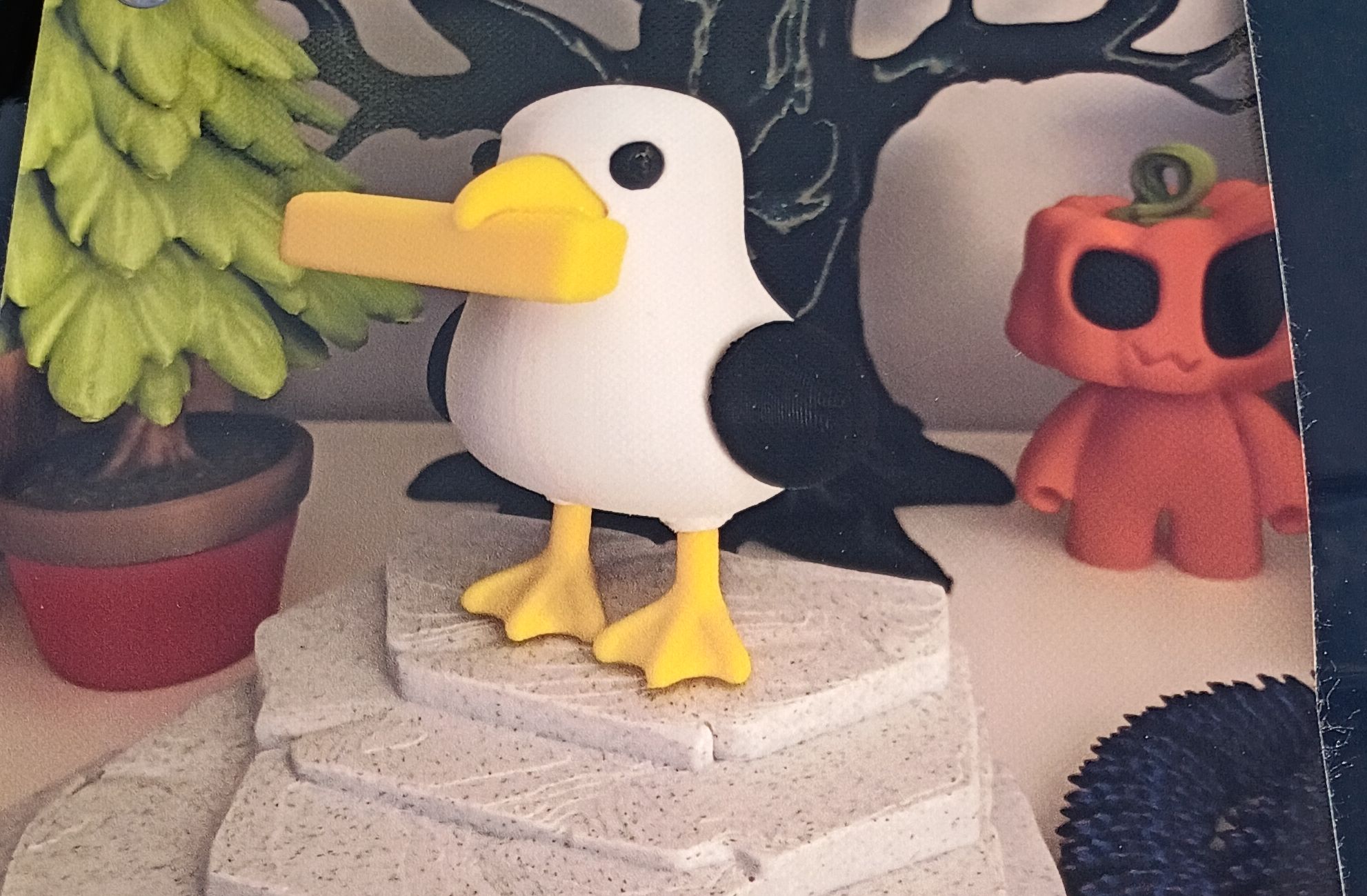
Everything here is 3D printed
Each piece is built one fine layer at a time from melted filament. That’s what gives the prints their crisp detail and their playful, made-by-hand character — and it’s why the material choice matters for how you use a piece.
Polylactic acid
The detail champion
PLA (polylactic acid) is a plant-based plastic made from renewable crops such as corn and sugarcane.
Best for
- Display models and figurines
- Miniatures and cosplay props
- Indoor decor and ornaments
- Toys and action figures for indoor use
- Desk decor
Strengths
- Crisp, fine detail — the best-looking prints
- A huge range of colors and fades
- Hard and rigid
- Beginner-friendly and inexpensive
Worth knowing first
- Poor heat resistance: it softens around 60°C / 140°F, so it can deform in a hot car, in direct summer sun, near a stove, or in a dishwasher.
- Not suited to regular outdoor use or load-bearing parts.
- Can be brittle if it takes a hard impact.
Polyethylene terephthalate glycol
The tough all-rounder
PETG (polyethylene terephthalate glycol) is a tougher plastic from the same family as drink-bottle plastic, modified so it bends instead of shattering.
Best for
- Functional parts — brackets, holders, clips, knobs
- Outdoor and damp or wet environments
- Watertight prints and containers
- Anything that sees some heat or repeated stress
Strengths
- Tough and impact-resistant, with a slight flex
- Better heat resistance than PLA
- Excellent layer bonding
- Good moisture and water resistance
- Easy to sand
Worth knowing first
- Still not heat-proof: it softens around 80°C / 175°F, which is below the inside of a hot car, so it can sag in a very hot car or strong sun.
- UV will eventually degrade it outdoors.
- Shows less fine detail than PLA.
An honest note on food safety
A quick honest note: 3D-printed items are best treated as decorative rather than food-safe. The tiny gaps between printed layers can trap moisture, food and bacteria that are hard to clean out. For anything that touches food or drink, a sealed or coated item, or a food-safe liner, is the better path.
If you’re after something specific for the kitchen or a gift that touches food, say so when you order and Randy will point you toward the right option.
Pick your colors
Here are the colors on the shelf right now. Every piece can be printed in any of these — and for a custom request, just tell Randy the color you have in mind and he’ll match it as closely as he can.
PLA colors
21 in stock · the detail champion
PETG colors
4 in stock · the tough all-rounder
Not seeing one you want? Ask about a specific color when you place a custom request — Randy will let you know what he can do.
Choose PLA for
Display pieces, detailed figurines, colorful shelf decor and anything that lives indoors, away from heat.
Choose PETG for
Functional bits and pieces, outdoor or damp settings, watertight containers, and items that get bumped, flexed or used in warmer spots.
Not sure which is right for your piece?
Tell Randy how you’ll use it and he’ll pick the best material — and the best colors while he’s at it.